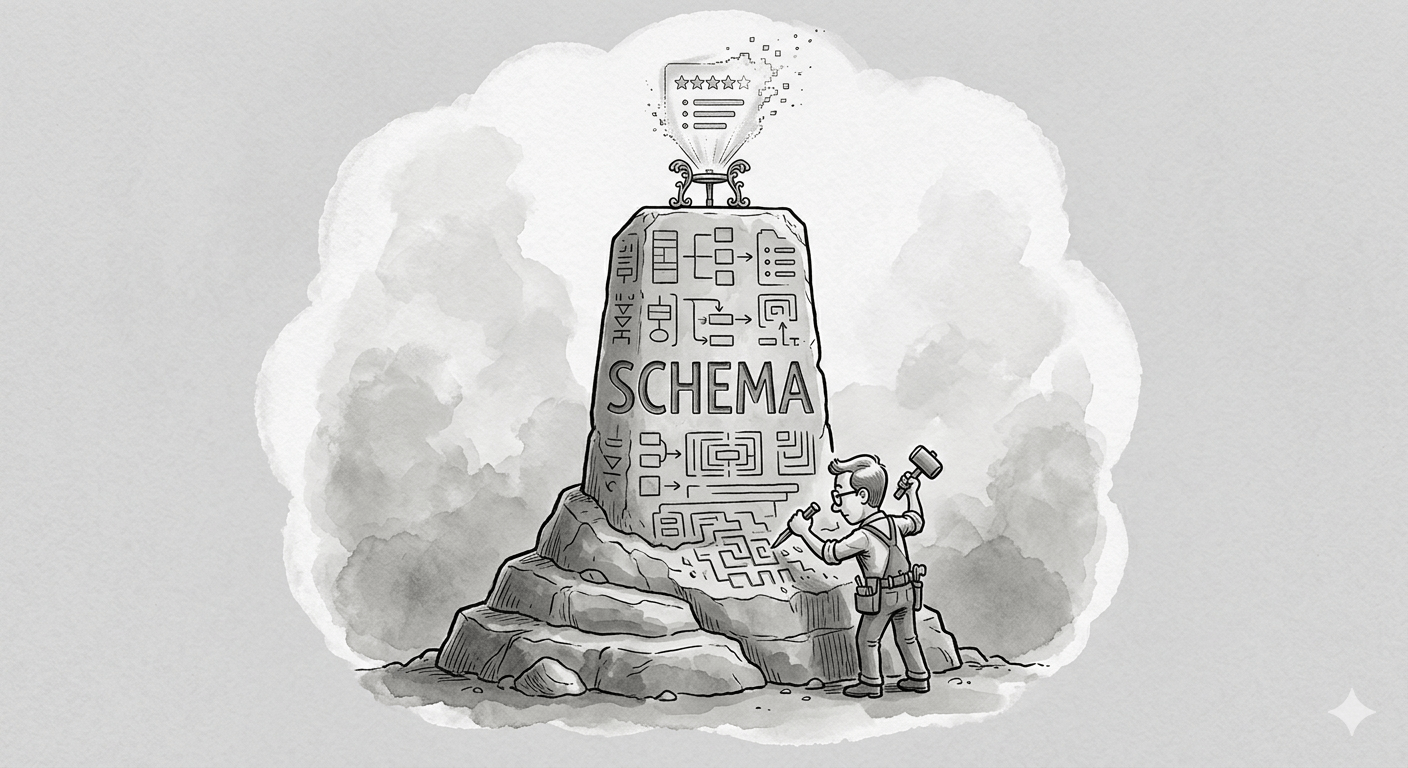
Google ended FAQ rich results in Search on 7 May 2026, in an update to its developer documentation. Search Engine Land covered the change the following day; PPC Land followed on 10 May. The feature had already been restricted to government and health sites since August 2023, so for most restaurant pages the rendering had disappeared years ago. The documentation update makes the end official.
The interface stopped rendering. The markup is still on the pages.
The rich result was never the asset
The line most coverage glossed over sits in the same paragraph as the deprecation notice: "Site owners can remove FAQ structured data if they wish, but there is no requirement to do so. Other search engines may continue to process and display FAQ markup. Leaving the code in place does not create Search Console errors or affect Google rankings."
Keep the data.
The rich result was the rendering, not the data. Google still reads the markup for page comprehension. Bing may still render it. The same structured fields feed every assistant downstream of the page — ChatGPT Search runs on Bing's index, Apple Intelligence builds from its own crawl, Perplexity assembles its own.
None of those interfaces care whether Google draws an accordion on a SERP. They care that the page declares, in machine-readable form, what is on the menu and what the kitchen does with it.
What chasing rich results gets you
For most of the last decade an SEO at a chain could earn a year by working through Google's rich-result catalogue. Products, reviews, recipes, FAQs. Each feature got a play. The play ran across hundreds of pages. The team moved on when Google launched the next one.
The trouble with that workflow is what happened on 7 May. The feature ends and the work goes with it. A restaurant that put FAQ markup on its pages to win the SERP accordion now has nothing to show. A restaurant that put MenuItem markup on its dishes to describe what they were has the same asset it had on 6 May, because the asset was never the rich result.
The reason to mark up a menu is not the carousel Google occasionally draws. It is that the same fields feed every reader downstream of the page.
What survives the next deprecation
Schema.org is a vocabulary, not a Google feature. Google, Bing, Apple and Yandex agreed on it years ago because each of them wanted to read the same web in the same way. Google ending the render of one structured-data type on its results page does not stop Bing from rendering it, or Apple, or the AI assistants that pull structured data to decide what to recommend.
For a restaurant marking up its menu, the types that survive deprecations are the ones that describe plain facts: MenuItem, priceRange, suitableForDiet, Restaurant, openingHoursSpecification, acceptsReservations. Those describe facts about a business that anything reading the web will keep wanting to know.
The cleanup the announcement implies
Strip nothing. Google explicitly says it will keep reading the FAQ markup for page comprehension, and other search engines may still render it. Pulling the code off pages now is busy work that destroys a small comprehension signal.
The audit worth running is a different one. The hours on Google Business Profile, the hours on the contact page, and the hours inside the JSON-LD on the home page should all match. Many do not. The dietary tags on the menu page, the prices in the JSON-LD, the name of the dish that appears on the printed card — those should agree with the kitchen too.
Menu software that outputs Schema.org markup as a side-effect of keeping the menu current, GMMO included, handles that drift quietly. The point is that the data underneath the interface outlives the interface that triggered it.
The accordion is gone. Nothing else broke.