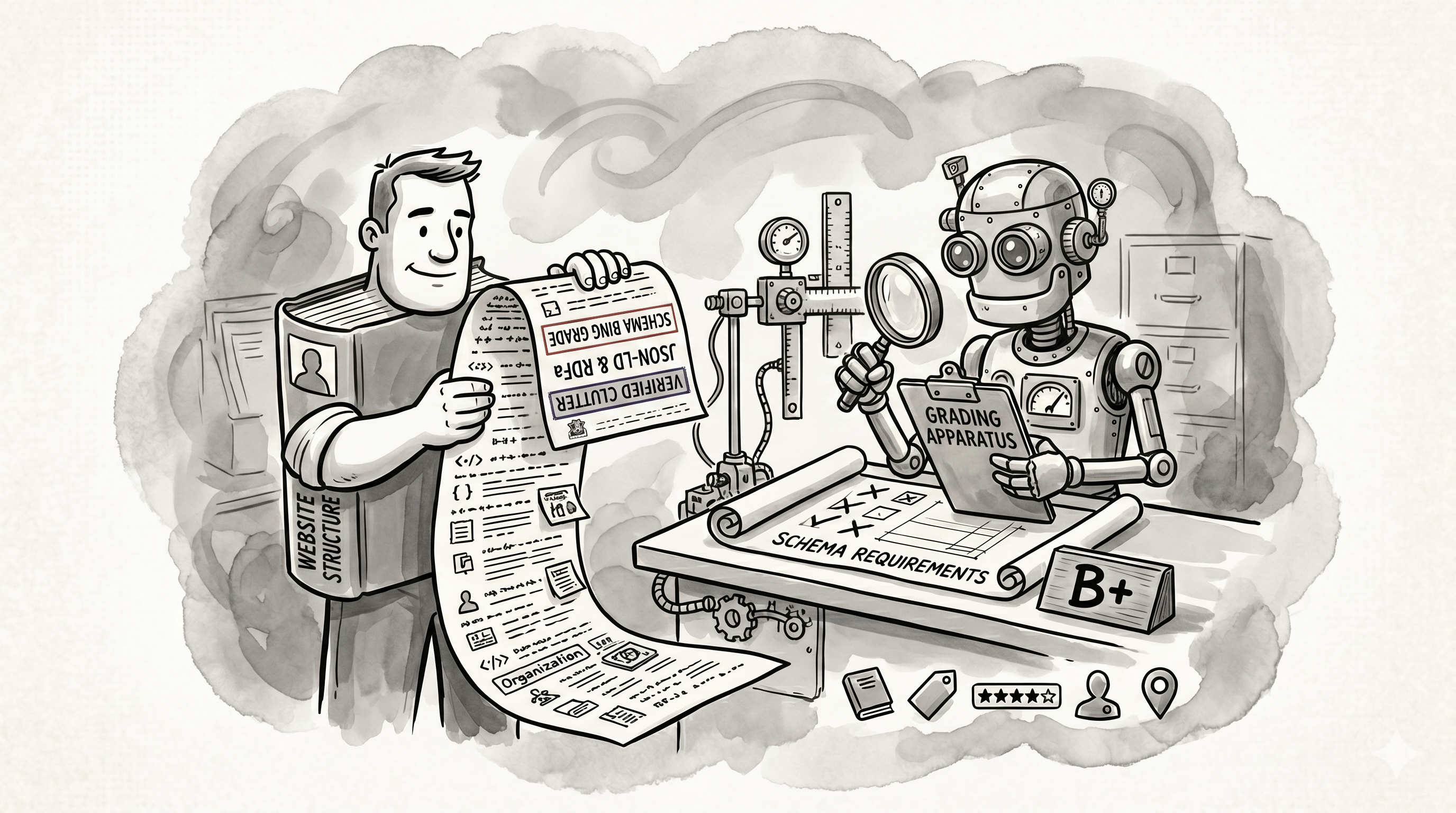
Bing's May 2026 algorithm refresh, written up by SEOvendor on 11 May, changed the terms for anyone with a restaurant page in Bing's index. The example in the write-up is direct: "If your markup says 'InStock' but an AJAX button shows 'Sold Out,' search engines will lose trust in your data fast." The refresh now weights the alignment between schema markup and the rendered page, and a mismatch between the two carries a ranking cost.
Bing rewrote how it weights schema
Bing now leans harder on structured data — LocalBusiness, FAQ, Service — and the new weighting punishes pages where the schema and the HTML tell different stories.
The instruction is not "add more markup". It is "stop letting your markup drift from the page".
The drift is normal in restaurants
A kitchen takes a dish off. The printed card gets updated. The website's HTML follows a few days later. The JSON-LD, maintained separately, does not catch up. By the time a customer or a crawler looks, the page is telling two different stories.
The same drift accumulates inside dietary tags, prices, opening hours, and the dishes a venue claims to serve at lunch. A JSON-LD block might still carry suitableForDiet: GlutenFreeDiet for a dish whose preparation changed months ago. Bing reads the tag as a claim and the rendered page as evidence. When the two disagree, the trust score drops.
ChatGPT Search and Copilot read Bing
Bing's UK market share is small. The reason a restaurant should still care about its structured-data update is that ChatGPT Search and Copilot both index through Bing. A change to how Bing weights schema is a change to what a substantial share of AI restaurant discovery sees and trusts.
A diner who asks Copilot for a roast near Piccadilly Gardens gets a shortlist assembled from Bing's index. A venue whose schema and page have drifted sits further down that list — not because a human visitor was misled, but because the model's confidence in the underlying data dropped.
Bing's trust score is the data layer ChatGPT Search and Copilot read restaurants through.
Multi-location chains take the sharpest hit
The SEOvendor write-up flags that multi-location businesses face particular pressure under the new weighting. Generic copy across cities sinks rankings fast.
For a twelve-site chain running the same menu page behind a different address field, the trust signal collapses everywhere at once. The fix is mechanical. Each location's schema needs to reflect what that kitchen actually does: hours, the dishes that site runs this week, prices it charges, dietary information specific to its preparation. Where the same dish travels across the estate, the description can repeat. Where it does not, the schema should not pretend.
The cleanup is dull and immediate
The audit needs nothing more than the page itself. Open the menu page. Read what the JSON-LD claims about hours, dishes, prices, dietary tags. Open the page on a phone and check the same facts in the visible HTML. Where the two disagree, fix the source the menu software pulls from.
Menu software that generates Schema.org markup from a single source of truth fails the drift test less often because there is nothing to drift from: the dish is described once, and the HTML and the JSON-LD render off the same record. GetMyMenuOnline works that way.
The SEOvendor write-up is a description of where rankings are heading, not a warning about where they might go. Bing's trust score already feeds the AI surfaces most diners now use. Getting schema and page to agree is not a future-proofing exercise. It is maintenance that is already overdue.