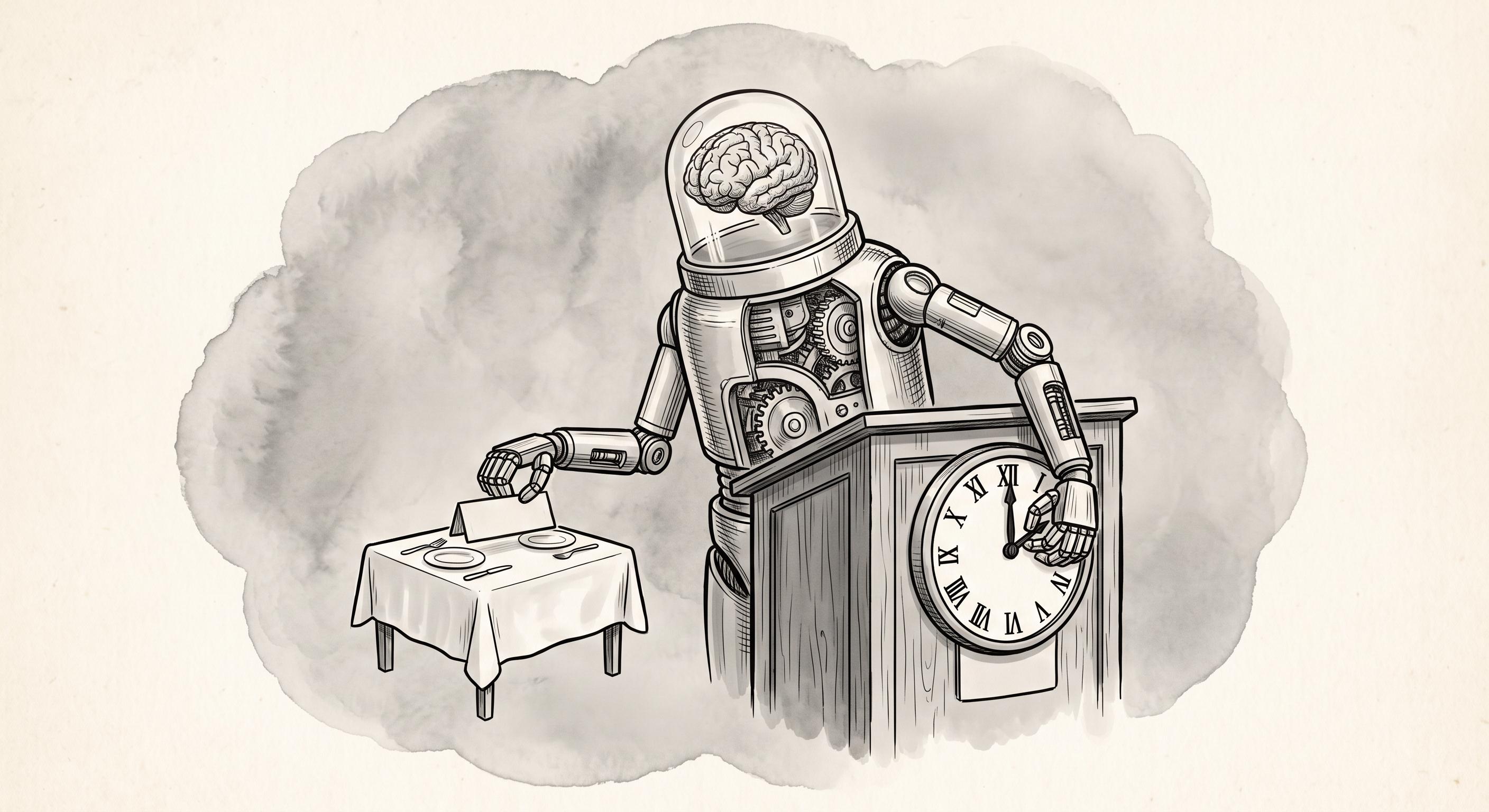
A photograph of a storefront sign is now enough to propose new opening hours for a restaurant on Google Maps. Upload it inside Ask Maps, and the app reads the hours off the sign, asks the contributor to confirm what it found, and files the suggestion on their behalf. Barry Schwartz reported on 2 September that the feature — Tell Maps — is rolling out in the United States, with more countries to come.
The correction form became a conversation
Suggesting a change to a business listing used to mean a fixed form: pick the field, type the value, submit. Google's own description of the new behaviour is that you can "suggest edits conversationally, right from Ask Maps and the Contribute tab". The same box people use to ask Maps questions now accepts statements about a place, and the example Google chose is a tip rather than a correction: "more parking is available behind the building."
Writing on LinkedIn, Claudia Tomina made the point that this is the AI acting rather than answering — finding the listing, formatting the contribution and posting it for the person who mentioned it. Nobody now needs to understand how Google's data model is shaped in order to change what it says about your restaurant.
A cheaper edit is a cheaper bad edit
Darren Shaw raised the obvious objection: a mechanism this frictionless can be pointed at a competitor. Google's answer is that Maps' "built-in protection systems review suggested edits for accuracy, and won't post suggestions that violate our policies" — the same assurance that has covered contributions for years, now sitting in front of a channel that takes seconds to use rather than minutes.
Hours are the field most exposed. They change for a bank holiday, for a private hire, for a stretch when the kitchen shuts early, and the card taped to the door is usually right before the listing is. A contributor photographing that card is doing the restaurant a favour. The same route works just as well for someone who would rather a rival showed as closed.
Maps is taking the order too
Tell Maps arrived in the same 6 August announcement as food ordering inside Ask Maps. Google's example query is "order spicy pad kee mao with seafood for me to pick up on my way home"; Maps finds restaurants open along the route and puts the dishes in a cart. The launch partners are Square and Toast, with Uber Eats named as coming soon. That is also United States first.
The dish-level data behind those orders arrives through the till, not through the restaurant's website. That produces an odd split: Maps learns what a kitchen sells from a point-of-sale integration, and learns when it opens from whoever last walked past with a phone. Neither of those routes runs through anything the restaurant wrote.
The listing and the menu are different assets
None of this is a reason to ignore a Google Business Profile. Claiming it, watching the edit notifications and correcting bad suggestions quickly matters more this month than it did last month, because the volume of suggestions is about to rise.
A listing has never held the detail a diner actually picks on. "Which of these has a nut-free pudding, and what does it cost" is not an hours-and-address query. It resolves against dish names, sections, prices and dietary flags, which sit in Menu and MenuItem markup rather than in a Business Profile field. There is no contribute button on your own domain.
The lead time is short and it is real
Conversational contributions and Ask Maps ordering are both United States only for now, and everything Google has said about the rollout points at other markets following. A UK restaurant therefore has some number of weeks before strangers can talk to its listing, and the use of that window is not to wait and see what gets submitted. It is to get the site's own version of the hours and the menu accurate enough that a bad suggestion is contradicted by something Google can already read.
Google has made it faster for other people to describe a restaurant. What none of those descriptions carries is the price of the thing on the plate.